Checking Your Home Door Lock Security: A Practical Guide
Your front door is your home's main barrier against unwanted entry. Over time, locks wear, alignment shifts, and components weaken. A simple check of a few key points can reveal whether your lock is still doing its job or needs an upgrade. This guide covers what to look at, why each point matters, and when to call a professional.
Start with the lock cylinder
The cylinder is the part where you insert the key. If it is old or basic, it may be vulnerable to picking, bumping, or snapping. A cylinder that sticks when you turn the key, or that feels loose, should be replaced. Look for a cylinder marked "anti-snap" or "anti-bump". These designs break away under attack in a way that leaves the lock still engaged, so a burglar cannot simply snap the cylinder and turn the mechanism.
Check the key operation. Does the key slide in smoothly? Does it turn without needing extra force? If the key is hard to turn, the cylinder may be misaligned or worn. A stiff key can also mean the internal pins are sticking, which weakens security. A simple test: insert the key, turn it slowly, and feel for any catch. If the movement is not smooth, have a locksmith inspect the cylinder.
Examine the security escutcheon
The escutcheon is the plate that surrounds the keyhole on the outside of the door. A good security escutcheon is made of hardened steel and fits flush against the door. It protects the cylinder from being gripped with tools such as pliers or a wrench. If the escutcheon is plastic or loose, an attacker can easily pull it off and then attack the cylinder directly.
Check that the escutcheon is screwed into the door, not just stuck on. Screws should be long enough to reach into the door's core, not just into the surface layer. A flimsy escutcheon that rattles or moves when you touch it needs replacing. A quality escutcheon also covers the gap between the cylinder and the door, stopping anyone from sliding a tool behind the cylinder.

Assess the multipoint lock system
Many uPVC doors have a multipoint lock that secures the door at several points along the edge. This type of lock is common on modern doors and offers better resistance to forced entry than a single-point lock. Over time, the moving parts inside the lock mechanism can wear or become stiff.
Open and close the door, then lock it. Does the handle lift and lower smoothly? Do all the locking points engage when you turn the key? You can check this by looking at the edge of the door when it is closed and locked. The hooks or bolts should extend fully into the keeps on the frame. If one point does not engage, the door is only held by the others, which reduces security. A multipoint lock that feels loose or makes grinding noises should be serviced or replaced.
Check door alignment and the locking keeps
A door that is out of alignment puts strain on the lock. Over time, the door can sag or the frame can shift, especially in older houses or after building work. When a door is misaligned, the bolts may not enter the keeps fully. This means the lock is not actually securing the door properly.
Close the door and look at the gap between the door and the frame. It should be even all the way around. If the gap is wider at the top or bottom, the door may be dropping. Try locking the door and then pushing against it from the outside. If you feel any movement, the bolts are not gripping the keeps tightly enough. Tightening the hinges or adjusting the strike plates can fix minor misalignment. For larger issues, a locksmith can shim the hinges or adjust the frame.
The locking keeps are the metal plates on the door frame that receive the bolts. They should be screwed into the frame with long screws that reach into the brickwork or timber behind the frame, not just into the softwood of the frame itself. A weak keep can be forced open with a crowbar. Check that the screws are tight and the plate is not bent. If the plate is loose or the screws are short, replace them with longer, hardened screws.
Look at the condition of the door itself
The lock is only as strong as the door it is fitted to. A solid core door made of wood or composite is much harder to break through than a hollow door. If your door is hollow or has large panels of glass, consider upgrading to a more secure door or adding a secondary lock.
Check the door for signs of previous forced entry: cracks near the lock area, splintered wood around the keep, or a door that does not sit square in the frame. Even if the lock looks fine, a damaged door can be easy to force open. A good rule is that the door, frame, and lock should all be of similar quality. A high-security lock on a weak door is a false sense of security.
When to call a professional
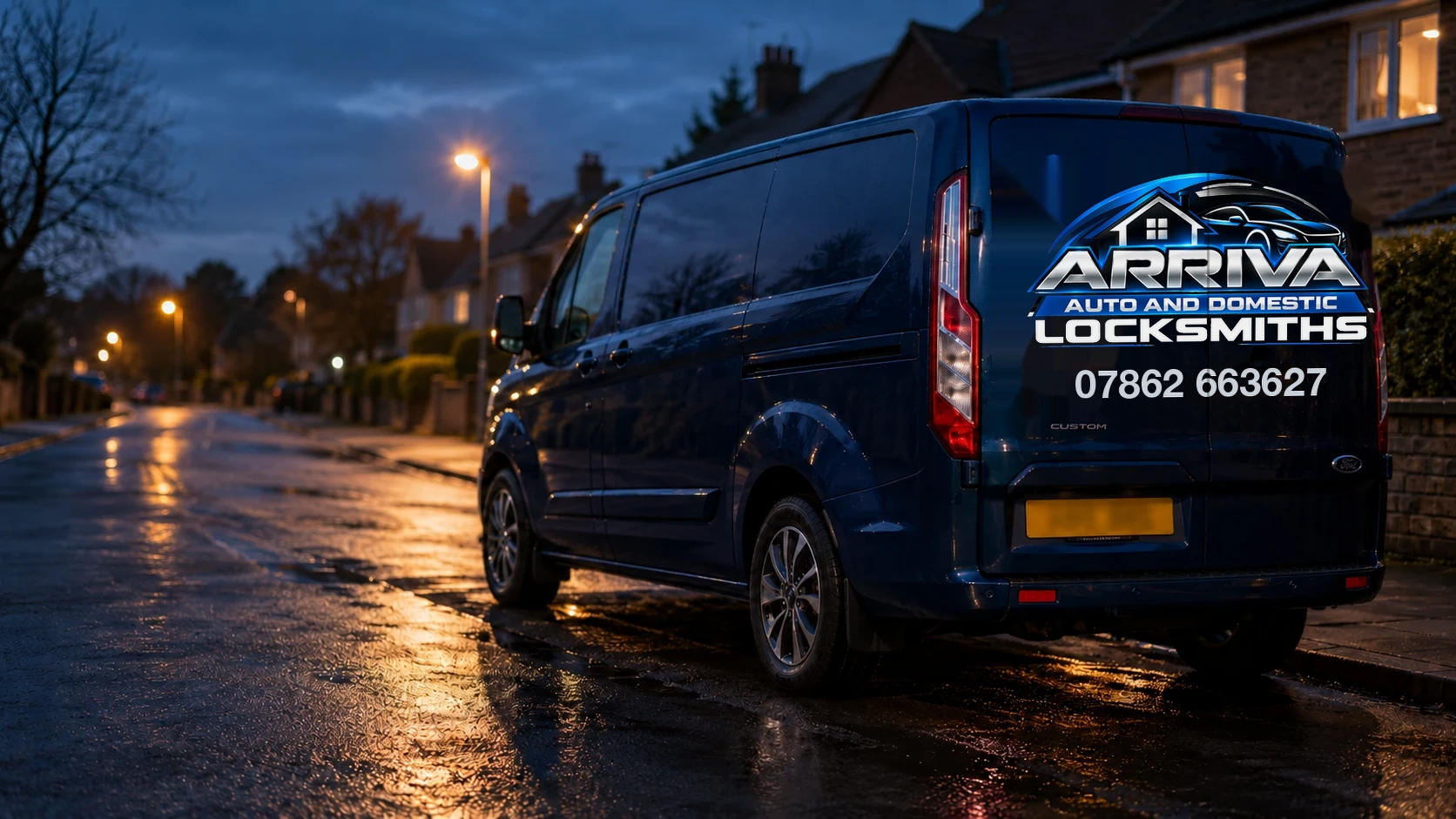
Most of the checks above are simple visual and tactile inspections. If you find any issue that requires tools you do not have, or if you are unsure about the condition of a component, call a qualified locksmith. Arriva Locksmiths provides 24 hour emergency, domestic, commercial, automotive locksmith and glazing services in Cannock and within 25 miles. They can assess your lock, recommend upgrades, and fit replacements that meet modern security standards.
Do not attempt to force a stuck cylinder or to adjust a door frame yourself if you lack the right tools. A mistake can leave you locked out or damage the door beyond simple repair. A professional can also advise on whether a multipoint lock can be replaced without changing the whole door, or whether an anti-snap cylinder is the right choice for your existing lock.
Upgrading to high security locks
If your current lock fails any of the checks above, consider upgrading to a high security lock. These are locks that meet British Standard BS3621 or equivalent. They are tested against physical attack, picking, and drilling. Many also include anti-snap cylinders and hardened steel components.
A high security lock is not a one-size-fits-all product. The right choice depends on your door type, the direction it opens, and the existing lock mechanism. A locksmith can match the lock to your door and install it correctly. A poorly fitted high security lock offers little more protection than a basic one.
For uPVC doors, the most common upgrade is to a multipoint lock with a euro cylinder that is anti-snap and anti-bump. For wooden doors, a five-lever mortice lock with a hardened steel case is a strong option. Always check that the new lock is compatible with your door's existing keeps and handle.

Regular maintenance also helps. Lubricate the cylinder and moving parts once a year with a graphite-based lubricant. Do not use oil, which attracts dust and can gum up the mechanism. Keep the keyway clean and free of debris. A well-maintained lock lasts longer and stays secure.
Your home's security depends on the weakest link. A simple checklist like this one can catch problems early, before they become a risk. If you are unsure about any point, or if you want to upgrade to high security locks, a professional such as Arriva Locksmiths can help you make the right choice for your home.
Ends · EVERYDAYSECURITY